Professional Growth and Development | With Industry Leaders
What Are You Reading?
HV Mfg asked the manufacturing community to recommend a book, article, or podcast that impacted them personally or professionally.

Elena Garuc
Executive Director of Fuzehub
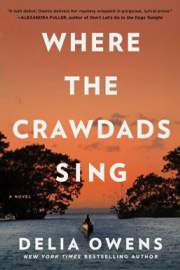
The Title: Where the Crawdads Sing
The Author: Delia Owens
A Brief Summary: Where the Crawdads Sing is a story written about Kya Clark, a young girl who grows up in the marshes of coastal North Carolina after her family leaves her behind. Known in town as the “Marsh Girl,” Kya is misunderstood and isolated by many of the towns people. The book centers around Kya learning to survive, trust herself, and create a life for herself.
In What Ways Did You Find It Valuable or Impactful: What I appreciated most about this book was Kya’s resilience. She faces circumstances that would make anyone feel defeated, yet she keeps moving forward. She learns from her surroundings, develops a deep knowledge of the marsh and nature, and ultimately finds a way to build a life in her own way.
The story also made me think about how easily people make assumptions. Kya is treated differently because she lives outside of what her community considers normal. Rather than seeing her as a person with a difficult story, many people reduce her to rumors and labels, not realizing her strength and determination. I also enjoyed how important the natural setting is to the story. The marsh is not just a backdrop; it feels like another character. It is Kya’s source of comfort throughout the book and guides her through all her difficult experiences.
What I enjoyed most about the story was connecting with Kya and watching her grow. After I was done reading, I missed her and wanted to continue with her on her complicated, yet exciting journey. She gave me strength!

Barry Silverman
Schlobach Distinguished Chair of Business, School of Management, Marist College
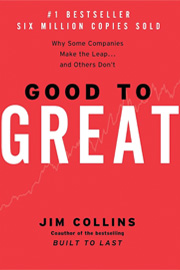
The Title: Good to Great
The Author: Jim Collins
A Brief Summary: Jim Collins wrote the most impactful and important business book I have ever read, and I am re-reading it as of late. Jim is a Professor at Stanford University and used his students to do research on a very important topic: “What makes a company great?” The crux of the book was primarily about “great leadership” and how it drove “great companies”.
There were several key findings from Jim’s research. His most important finding is that great CEOs combined, personal humility, professional will, and long-term focus. The next lesson focused on the critical importance of getting the “right people on your bus.” The idea is that great people can adapt when circumstances change, whereas a great strategy with the wrong people is unlikely to succeed.
In all cases, great CEOs maintain an unwavering faith that you will prevail while simultaneously confronting the most brutal facts of your current reality. Great CEOs also recognized that great companies don’t try to do everything. They become exceptionally focused on the things that matter most. They understand that you must focus on the problem, not start with a solution. In today’s world this may translate to:
A company shouldn’t ask: “How do we implement AI?”
It should ask:
“What business problem are we trying to solve, and could AI help us solve it better?”
In What Ways Did You Find It Valuable or Impactful: This book was hugely impactful for me as I based my entire management style as a professional on these findings. It helped me develop deep, meaningful relationships with people and any time I was successful, I attributed it to Collin’s key lessons from Good to Great.

Jim Szumlaski
CPA, Partner, PKF O’Connor Davies
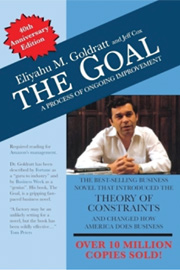
The Title: The Goal: A Process of Ongoing Improvement
The Author: Eliyahu M. Goldratt
A Brief Summary: I first read The Goal in an organizational behavior class as part of my master’s program, and its central message has stayed with me. Written as a business novel, it follows Alex Rogo, a manufacturing plant manager whose facility is in danger of being shut down unless its performance improves quickly.
With the help of a mentor, Alex learns that the objective is not simply to keep every machine and employee busy. The real goal is to improve the company’s ability to generate profitable sales. He and his team identify the plant’s constraints, or bottlenecks, and make targeted changes to improve the flow of work, reduce delays, and better meet customer commitments.
In What Ways Did You Find It Valuable or Impactful: As a CPA who works with manufacturing businesses, I have always appreciated how clearly the book connects operational decisions to financial results. It is easy to focus on labor utilization, machine efficiency, inventory levels, or monthly profit, but those measures can be misleading when viewed in isolation.
The book also addresses robotics and the increasing use of technology in manufacturing. One of its enduring lessons is that automation is not automatically an improvement simply because it is advanced or efficient. Technology must support the overall flow of the business and address the actual constraint; otherwise, it can add cost, complexity, or inventory without improving the company’s results.
That point feels especially relevant today as companies evaluate artificial intelligence. AI can be a meaningful tool for improving decisions, efficiency, and customer service, but it should be applied thoughtfully to a real business need—not simply because the technology is available. The Goal remains an accessible reminder that sustained improvement comes from understanding the full process, focusing on the critical constraints, and using technology to create measurable value.

Brian Hutchins
General Manager, CMw, Community Metalworks, LLC
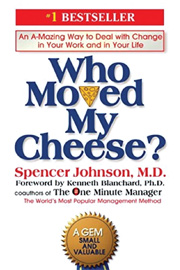
The Title: Who Moved My Cheese?
The Authors: Jim VandeHei, Spencer Johnson, M.D.
A Brief Summary: Change is inevitable — whether in your career, relationships, health, or daily routines. Yet most people resist it, clinging to what’s familiar even when circumstances shift. In Who Moved My Cheese?, Spencer Johnson uses a simple parable to explore why people struggle with change and how they can adapt more effectively.
Through the story of two mice and two “Littlepeople” searching for cheese in a maze, Johnson illustrates different responses to change. You’ll learn why some people anticipate and adapt to change while others deny it, how fear and attachment keep you stuck, and what steps you can take to move forward when your “cheese” disappears. Johnson also offers guidance for leaders helping teams navigate transitions in the workplace. An A-Mazing way to deal with change in your work and in your life.
In What Ways Did You Find It Valuable or Impactful: We are in the process of moving our facility 40 miles north to Saugerties. A friend suggested that I read “Who Moved My Cheese”. What I found interesting is that our employees are in the same position as the characters in the book, Who Moved My Cheese.
Our employees’ concerns are real, and one day soon, their cheese will be gone. It was enlightening to read this book and to understand the concerns our employees are going through with those who struggle with change. In the book, one of the characters asked, what would I do if I was not afraid? What a great question.
We as leaders make tough decisions every day and they impact the lively hood of our employees. The fear of change affects everyone, but this book helped me understand that you can learn to deal with change, but you can’t prevent change from happening. Change is inevitable, those who anticipate and adapt to change thrive, fear and denial can keep people stuck, and taking small steps leads to new opportunities.
This easy-to-read book had a meaningful impact on me, and I was inspired to provide a copy to all of our employees.

Johnnieanne Hansen
CEO, Council of Industry
The Title: The Ballad of Songbirds and Snakes
The Author: Suzanne Collins
A Brief Summary: Decades before The Hunger Games, The Ballad of Songbirds and Snakes introduces us to eighteen-year-old Coriolanus Snow, long before he becomes the ruthless president of Panem. Ambitious and determined to restore his family’s standing, Snow sees his assignment to mentor Lucy Gray Baird in the tenth Hunger Games as an opportunity to change the trajectory of his life.
Throughout the novel, Collins explores the influence of those in power who challenge, manipulate and reward Snow, reinforcing the idea that fear and control are necessary to maintain order, while showing how ambition, circumstance and a series of seemingly rational choices shape the person he will ultimately become.
In What Ways Did You Find It Valuable or Impactful: My son is a rising college junior and was working in South Carolina this summer and we decided to reread the Hunger Games series together, mostly because it gave us something to talk about while he was away. That led me to The Ballad of Songbirds and Snakes, which was read with a new appreciation, and at times frustration, for the complexity of navigating systems designed to ensure order and compliance.
I found myself focused on the exploration of power, ambition, fear and control, and how seemingly small decisions ultimately can shape both a person and the organizations around them.
The Capitol believes order is essential to preserving society. Its response to uncertainty is greater control: more rules, stronger consequences and systems designed to produce particular behaviors and outcomes. In doing so, it also constrains the freedom, opportunity and the potential of the people it governs.
People, organizations and institutions establish rules and expectations because they are trying to achieve an outcome. Structure is necessary and often enormously beneficial. But the book made me think about a tension that feels remarkably current, and, perhaps timeless: what happens when a system or organization becomes more focused on securing compliance than earning commitment? And when it isn’t producing the desired result, adding another layer of control may seem easier than asking whether something more fundamental needs to change.
Snow himself embodies that tension. His ambition is not difficult to understand. He wants security, success and the restoration of his family’s standing. But within a system that increasingly values control over compassion and compliance over earned loyalty, Collins shows how ambition, when combined with fear and self-preservation, can become destructive and that each compromise makes the next one a little easier to justify.
That’s what I found most interesting about the book. It doesn’t simply ask whether power corrupts. It asks how people and institutions convince themselves that the choices they make are necessary, and whether, in trying so hard to protect what they have built, they can ultimately weaken it.
For me, it reinforced a belief that leadership is a responsibility to steward those in our care with compassion and create the conditions for people and organizations to pursue excellence — without sacrificing individuality, humanity or the strength that comes from working toward something collectively.


Sean Hamilton
Director of Operations, Putnam Precision
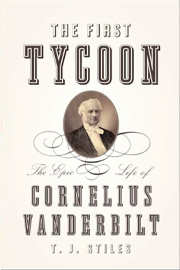
The Title: The First Tycoon: The Epic Life of Cornelius Vanderbilt
The Author: T. J. Stiles
A Brief Summary: T. J. Stiles offers a compelling account of one of the most influential figures in American business. Born into modest circumstances on Staten Island during George Washington’s era, Vanderbilt advanced from operating small boats to building a transportation empire that reshaped the nation.
Known as the “Commodore,” Vanderbilt transformed the steamship and railroad industries, built one of the nineteenth century’s largest fortunes, and helped shape modern American capitalism. His influence reached beyond business into major events of his time, including the Civil War and the California Gold Rush.
The First Tycoon also chronicles America’s nineteenth-century economic transformation. Through Vanderbilt’s life, readers see the rise of large-scale industry, corporate power, and the competitive forces that shaped the modern economy. The result is an engaging portrait of a man whose ambition, determination, and innovation left an enduring mark on the nation.
In What Ways Did You Find It Valuable or Impactful: I found it valuable to see how Cornelius Vanderbilt’s rise as America’s first tycoon helped define the nation’s evolving capitalist system. His story also prompted me to reflect on people throughout history — and in our own lives — who mastered emerging technologies in their fields, using entrepreneurial agility, skill, timing, and innovation to seize opportunities in rapidly changing markets.
Vanderbilt’s generation shared many of the Founding Fathers’ sensibilities. Likewise, many of us benefited from the values passed down by the World War II generation, which gave us the skills and determination to embrace technological change.
I recommend this book to help the next generation of entrepreneurs and innovators understand how transformation has succeeded across eras of American technological growth.