The First Industrial Revolution Changed Machines.
This One Is Changing Humans.
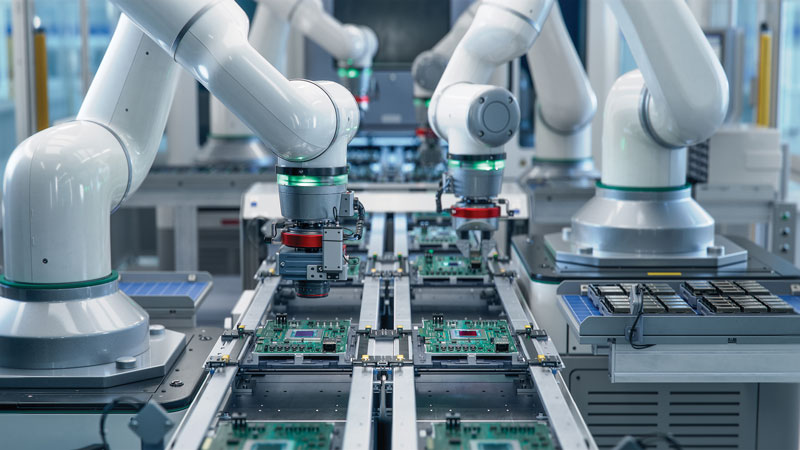
Eighty percent of manufacturers plan to increase their AI investment in the next two years. That is not just a trend, it’s a line in the sand. Companies that invest in and engage with AI tools are gaining an advantage, while those that ignore the technology risk falling behind.
In the evolving landscape of Hudson Valley manufacturing, a practical new bridge is being built between the classroom and the factory floor.
The Council of Industry and the State University of New York (SUNY) are working to address a long-standing challenge: ensuring that the next generation of workers arrives not just with technical potential, but with the professional reliability required to succeed in today’s demanding economy, through a new collaborative initiative.
Acting as an intermediary, the Council of Industry will actively encourage the employment of SUNY student interns at local Mid-Hudson employers.
This is more than just filling vacancies; it’s about shifting the fundamentals of how we prepare young people for the rigors of the modern economy. As work becomes increasingly digitized, especially in manufacturing firms, the “human element” – the ability to show up, communicate, problem solve, and follow procedures – has never been more valuable.
Beyond the Textbook: The Language of Work
For many students, internships are their first true exposure to the high-stakes world of the modern workforce. While academic programs excel at teaching theory, “employability skills” are best forged through experience.
An internship delivers students the fundamental skills of communication, punctuality, and adherence to workplace procedures.
In a manufacturing setting, these are safety and productivity requirements. Learning how to communicate with a supervisor, understanding the importance of a 7:00 am start, and following precise Standard Operating Procedures (SOPs) are the bedrock of a successful career.
By placing students in these environments early, the Council and SUNY help them build a professional “muscle memory” that serves them regardless of their eventual specialty. These programs provide a “safe-to-fail” environment, where lessons in accountability are learned under the mentorship of seasoned industry professionals.
Understanding why a safety protocol is followed, or how a delay ripples through a supply chain, is eye-opening for an intern. By the time they complete their stint, an intern moves past the “student” mindset and adopts a “professional” one defined by accountability.
When a student returns to the classroom after a semester internship, they bring a new level of seriousness to their studies, understanding the why behind the math and the reason for the rigor.
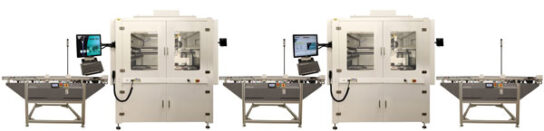
Sono-Tek’s FlexiCoat Inline spray coating system.
The Value of the Intermediary
One of the primary hurdles for small to mid-sized employers is the administrative lift required to start an internship program. Many firms have the willingness to mentor but lack the direct connection to the massive SUNY system.
This is where the Council of Industry plays its most vital role.
Johnnieanne Hansen, CEO of the Council of Industry, sees this as a core mission for the organization.
“We see this collaboration with SUNY as a real opportunity to bring value to our members, as well as other firms in the region,” Hansen said. “We know internships are a critical workforce pipeline tool for both employers and students. So, if we can help create more opportunities, everyone wins.”
Through this partnership, the Council acts as the “translator” between academia and industry, Chris White, Vice Chancellor for Workforce Development and Upward Mobility at SUNY, explains.
“Intermediaries, like the Council of Industry, who already have very strong connections with businesses, members who are part of the community, can take those connections and leverage them to provide expertise about how to start or scale internship programs.”
SUNY Commits to Aligning Education with Industrial Outcomes
The driving force behind this shift is a commitment to ensuring higher education delivers tangible value to both the students and the local economy.
In 2023, SUNY Chancellor John King established a goal that every undergraduate student take part in an internship or other experiential learning program tied to High-Impact Practices.
Chris White is taking on this challenge. He notes that the modern university must be an active participant in the regional and state economy.
“I think today’s version of higher education has to be – and the chancellor is very, very committed to this – tied to outcomes,” White continued. “More specifically, it’s what industry is looking for. It’s what students are looking for and one of the best ways to ensure success.”
White recognizes that the path to a career is rarely a straight line. The SUNY system serves a massive, diverse population whose needs are as varied as the companies within the Council of Industry and the Mid-Hudson region as a whole.
“Our students are wide-ranging, just like the needs of a business are incredibly wide-ranging,” White adds.
By tying educational experience to specific industrial outcomes, SUNY is “reverse-engineering” its workforce development to reflect the realities of Hudson Valley workplaces, including manufacturing shop floors today.
- Check the Toggle: Most paid AI platforms allow you to turn off “training.” This ensures your data stays private and isn’t used to improve the public model.
- Set a Data Policy: Clearly define what can be entered (operational friction points) and what cannot (proprietary code or protected customer data).
- Appoint a Scout: You don’t need a technologist; you need a “Scout” someone curious and organized to stay current on privacy settings as the systems evolve.
The Career Hub: A Digital Matchmaker
Central to making these experiences a reality is the Council of Industry’s Manufacturing Career Hub.
Historically, finding a qualified job or intern candidate depended on informal personal networks or scrolling through a dozen disjointed job boards. This platform – built and managed by the Council – acts as a specialized digital clearinghouse, where manufacturers post their specific needs and candidates, including those for internships from across the SUNY system.
For a time-strapped shop manager, the Career Hub is a legitimate gamechanger. It eliminates the administrative headache of navigating dozens of individual job boards and campus offices, providing a single, streamlined portal to access regional talent.
By hosting this centralized tool, the Council of Industry is moving Hudson Valley internship recruitment into a modern, data-driven, highly accessible era.
A Win-Win for the Region
While SUNY Internship Intermediary Program is still developing, the early results are promising.
Employers are finding that interns coached on employability skills become productive faster. Meanwhile, students see a path forward that doesn’t require leaving the Hudson Valley to find high-value work.
The “everyone wins” scenario, described by Johnnieanne Hansen, is becoming a reality. Local employers get a vetted pipeline, and the students get a head start on a lucrative career, while the region’s economy benefits from a stronger, more experienced workforce.
Our foundation is solid, by aligning our educational institutions with our industrial leaders, we are creating the future of the Hudson Valley.

Kathy D’Agostino is the founder of Win at Business AI, and a Certified AI Skill Development Trainer and Consultant.